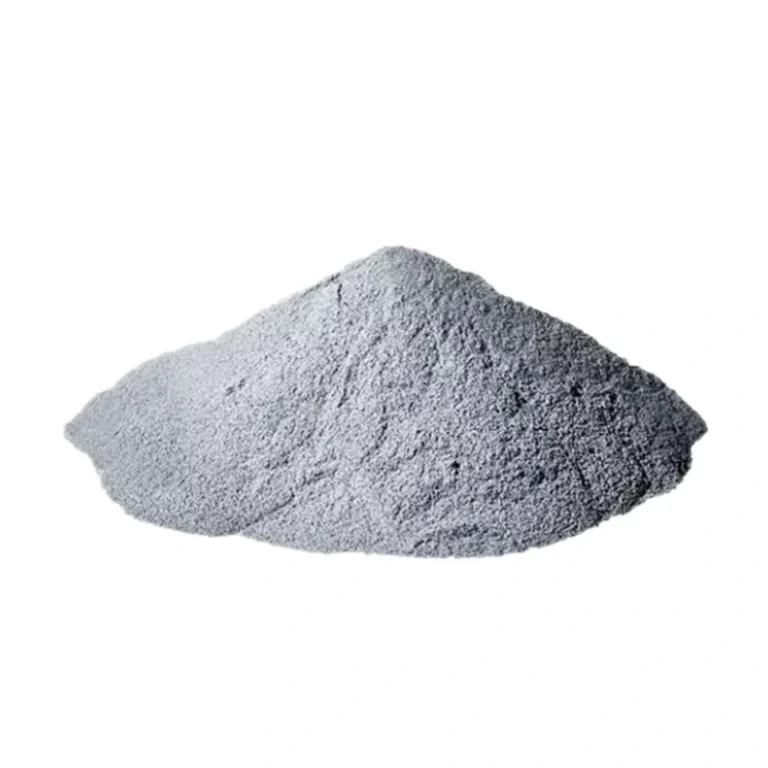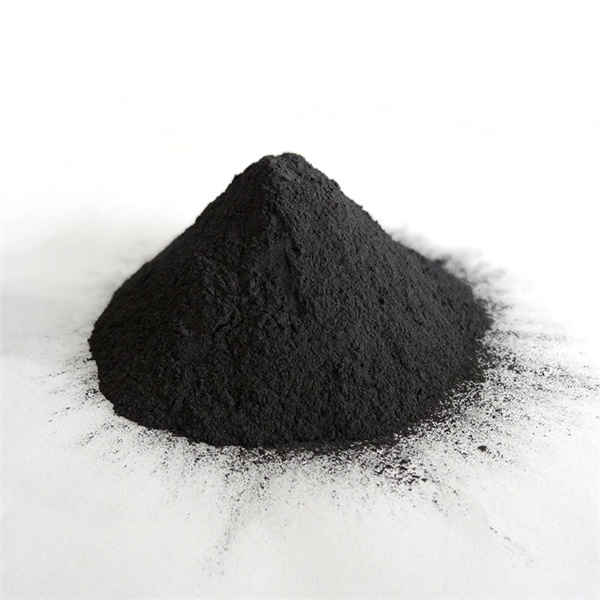
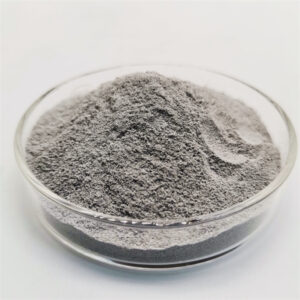
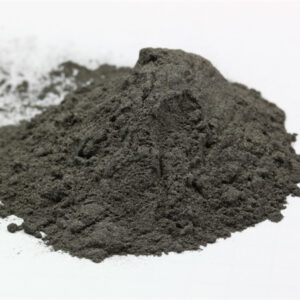
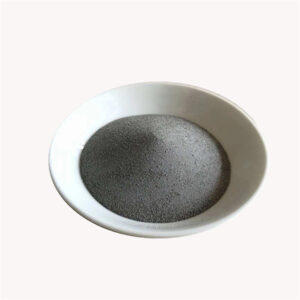
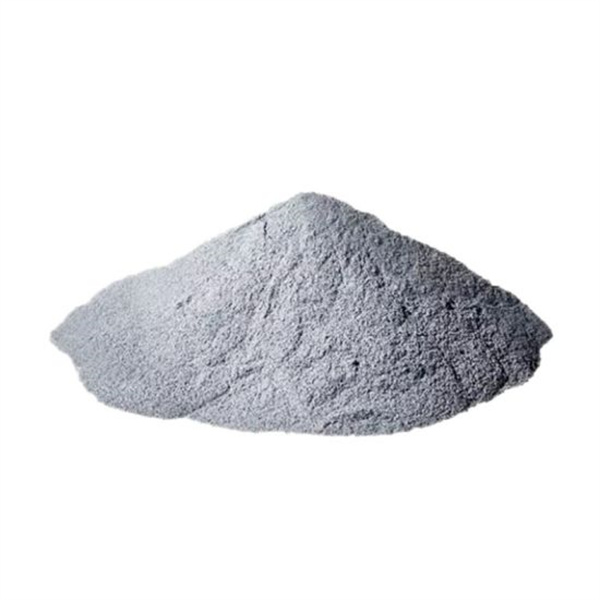
Metallic powders refer to fine granules of metal used in manufacturing, fabrication, and other industrial applications. They consist of metal particles in powder form that exhibit unique properties compared to bulk metal that make them suitable for specialized uses.
Key details about metallic powders:
| Samenstelling | Pure metals like iron, copper, aluminum, nickel, etc. or metal alloys |
| Deeltjesgrootte | Varies widely from 10-250 microns depending on intended use |
| Productieproces | Atomization, electrolysis, carbonyl process, grinding, condensation, etc. |
| Belangrijkste eigenschappen | Flowability, apparent density, tap density, compressibility, permeability, etc. |
| Belangrijkste toepassingen | Additive manufacturing, injection molding, pressing and sintering, welding, brazing, surface coating, etc. |
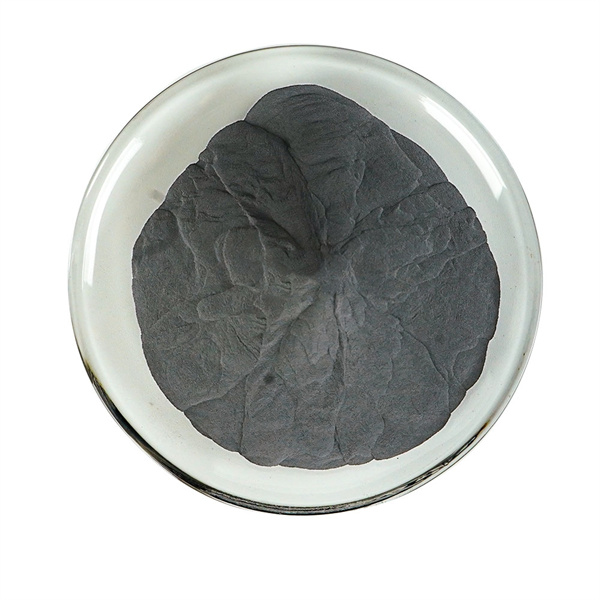
Types van Metallic Powders
Many pure metals and metal alloys are available in powder form for industrial uses. Some of the major categories and examples include:
| Type | Samenstelling |
|---|---|
| Pure Metal | Iron, copper, aluminum, chromium, nickel, cobalt, tungsten |
| Ferrous Alloys | Stainless steel, tool steel, alloy steel |
| Non-Ferrous Alloys | Brass, bronze, titanium alloys |
| Edelmetalen | Gold, silver, platinum |
| Vuurvaste metalen | Tungsten, molybdenum, niobium, tantalum |
The specific metal or alloy chosen depends on factors like cost, physical properties required, compatibility, aesthetics, and performance needs of the application.
Samenstelling en kenmerken
The composition and characteristics of metallic powders depend on the base metal, alloying elements used, production method, particle size range, shape, porosity, and surface treatment.
| Parameter | Beschrijving |
|---|---|
| Base Metal | Core element that makes up highest composition. Determines density, strength, melting point, etc. |
| Legerende elementen | Added to tailor physical and mechanical properties like hardness, corrosion resistance, conductivity, etc. |
| Productieproces | Influences particle size range, shape, porosity level, flow characteristics, apparent density, etc. |
| Deeltjesgrootte | Typical range is 10 – 250 μm. Sub categories of nanopowders (<100 nm) also exist. Impacts reactivity, flowability, density. |
| Deeltjesvorm | Spherical, shredded, irregular, flaky. Affects flow rate, packing density, layer adhesion in additive manufacturing. |
| Porositeit | Solid or porous particles. Porous absorbs moisture easily. Solid has higher density. |
| Surface Treatment | Coatings (organic, metallic) can improve flowability, reduce reactivity with environment. |
Understanding how these parameters impact powder properties allows selection of appropriate powder for an application.
Toepassingen en gebruik
Metallic powders find widespread use in manufacturing, construction, electronics, automotive, aerospace, medicine and other sectors.
| Gebied | Toepassingen |
|---|---|
| Additieve productie | 3D printing of metal parts using technologies like DMLS, SLM, EBM, binder jetting |
| Poeder Spuitgieten | Manufacture of small, complex, net-shape metal parts with good finishing |
| Poeder-Metallurgie | Press and sinter powder compacts into parts; ashless lubricants improve properties |
| Welding & Brazing | Filler metal powders for joining metals; flux-cored wires improve welding |
| Deklaag | Thermal spray metallic coatings for corrosion and wear protection |
| Elektronica | Conductive silver, copper and nickel powders in adhesives and inks |
| Auto-onderdelen | Powder forged steel and aluminum transmission gears, engine parts |
| Lucht- en ruimtevaart | Titanium and nickel alloy precision parts; turbine and blade coatings |
| Geneesmiddel | Porous titanium implants allow bone ingrowth; bio-resorbable iron powders |
Metallic powders serve diverse applications across many technology domains and enable specialized fabrication techniques.

Specificaties
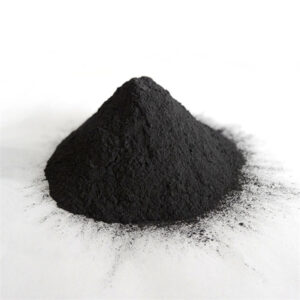
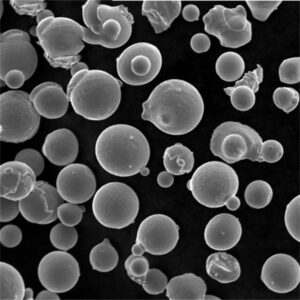
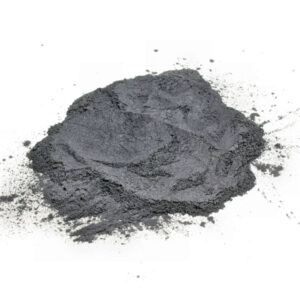
Metallic powders must meet a range of precise physical and compositional specifications for them to function effectively in manufacturing processes.
| Parameter | Typische waarden | Rol |
|---|---|---|
| Deeltjesgrootte | 10 – 150 μm | Determines density/flowability; smaller = more reactive |
| Schijnbare dichtheid | Up to 65% of true density | Impacts weight, flowability; lower density packs better |
| Tik op Dichtheid | Up to 80% of true density | Indicator of flow characteristics under vibration/agitation |
| Verhouding Hausner | <1.25 indicates good flowability | Ratio of tap density to apparent density |
| Samendrukbaarheid | 20-35% | Ability of powder to reduce volume under pressure |
| Angle of Repose | <40° is free flowing | Steepness of powder pile; lower = more flowable |
| Hall Flow Rate | <30 s/50 g | Time taken for 50g powder to flow through an orifice |
| Morfologie | Bolvormig/onregelmatig | Particle shape affects fluidity and packing density |
| Puurheid | >99,5% | High purity required for performance; removed by gas atomization |
| Vochtgehalte | <0.1 wt.% | Moisture causes poor flow and reduced strength |
Meeting specifications ensures batch-to-batch consistency and powder compatibility with production processes.
Powder Production Processes
Metallic powders are produced through various methods, each resulting in powders with different characteristics suited to certain applications.
| Proces | Methode | Typical Size | Morfologie | Schaalbaarheid | Kosten |
|---|---|---|---|---|---|
| Gasverstuiving | High pressure gas breaks up molten metal stream | 15 – 150 μm | Meestal bolvormig | Hoog | Medium |
| Waterverneveling | Breakup with high velocity water jets | 20 – 250 μm | Onregelmatig, poreus | Hoog | Laag |
| Elektrolyse | Electrochemical reaction deposits fine particles | 1 – 1000 μm | Dendritisch, poreus | Laag | Hoog |
| Roterende elektrode | Centrifugal forces dislodge particles | 20 – 100 μm | Flaky, irregular | Laag | Medium |
| Carbonylproces | Thermal decomposition of gaseous compounds | 1 – 10 μm | Bolvormig | Hoog | Hoog |
| Mechanisch frezen | Hard particles grind metal lumps into powder | 10 - 250 μm | Onregelmatig, poreus | Hoog | Laag |
- Gas and water atomization allow high production rates of fine spherical powders good for additive manufacturing
- Electrolysis gives porous, irregular powders suitable for pressing/sintering
- Mechanical milling is versatile for producing composite, alloy, nano powders from different metals
Thus powder attributes can be tailored using different methods of production.
Grades and Standards
Various national and international standard organizations have developed grade specifications for common metal powders to enable quality control during manufacture and use.
| Regio | Grades Specified | Metals Covered | Rol |
|---|---|---|---|
| Verenigde Staten | MPIF Standards | Iron, steel, stainless steel, copper, brass, nickel alloys | Ensures consistent mechanical properties |
| Europa | EN, DIN and ISO Standards | Steels, stainless steels, tool steels, copper, aluminum alloy, nickel, cobalt | Powder compatibility with industrial processes |
| Japan | JIS Standards | Iron, copper, aluminum alloy powders | Defines precise testing methodology |
| India | BIS Standards | Iron, steel, copper powders | Tailored to Indian manufacturers and users |
The grade designation indicates particle size range, purity levels, alloy composition and other parameters that help match powders with intended usage in various sectors.
Prijzen
Prices of metal powders depend on composition, purity levels sought, production method used, scarcity of raw materials, supply-demand dynamics and quantity purchased.
| Metaalpoeder | Prijsklasse* |
|---|---|
| Iron and Low Alloy Steel | $1 – 3 per kg |
| Tool and Stainless Steel | $5 – 10 per kg |
| Nikkellegeringen | $10 – 30 per kg |
| Titanium and Superalloys | $50 – 250 per kg |
| Wolfraam zware legeringen | $50 – 100 per kg |
| Precious Metals (Au, Ag, Pt) | $3000 – 5000 per kg |
Estimated price ranges for bulk quantities purchased directly from major producers.
Prices follow typical order – ferrous metals < non-ferrous alloys < high performance alloys based on input metal costs. Mass-market metals like iron and stainless steel powders are produced in high volumes making them most economical.
Comparison Between Major Metallic Powder Types
| Parameter | Roestvrij staal | Aluminum Alloy | Nickel Alloy | Titanium Alloy |
|---|---|---|---|---|
| Dikte | Medium (7-8 g/cc) | Low (2.7 g/cc) | High (8-9 g/cc) | Medium (4.5 g/cc) |
| Kracht | Medium | Laag | Hoog | Medium |
| Reactivity | Laag | Hoog | Medium | Hoog |
| Warmtegeleiding | Laag | Hoog | Medium | Laag |
| Corrosieweerstand | Hoog | Medium | Hoog | Hoog |
| Kosten | Laag | Laag | Hoog | Heel hoog |
| Example Applications | Medical implants, kitchenware | Automotive parts, aircraft | Turbine blades, marine | Lucht- en ruimtevaart, medisch |
- Stainless steel powders offer corrosion resistance and strength at low cost suitable for consumer products
- Lightweight aluminum alloy powders utilized widely for weight-sensitive auto components
- Nickel alloys handle high temperatures well; useful for engines and gas turbines
- Titanium possesses strength-to-weight ratio desired in aircraft structural parts
Thus each powder type has specific characteristics that make it preferable for niche applications in various industries.
Voor- en nadelen van Metallic Powders
| Voordelen | Nadelen |
|---|---|
| Very high surface area increases reactivity | Prone to fire and dust explosions if powder is suspended |
| Near net-shape parts from various techniques | Requires protective atmosphere or coatings due to high reactivity |
| No scrap or machining unlike conventional methods | Often lower strength and density compared to cast and forged metal |
| Consistent fine microstructure from rapid cooling | Special handling and containers needed to prevent contamination |
| Easily alloyed into high performance compositions | Flow characteristics vary significantly for different powders |
| Lower energy usage than extraction from ores | High cost for some specialty metal powders |
| Simplified manufacture of complex, intricate shapes | Porosity issues during compaction affect mechanical properties |
Pluspunten – metallic powders enable transformative manufacturing possibilities and tailored properties from wide material choices.
Nadelen – safety issues exist with storage and handling; properties are application specific.
With sound engineering controls, the unique benefits of metal powders outweigh shortcomings for critical applications.
FAQ
Why are metallic powders used instead of solid metals?
Metallic powders offer unique advantages over bulk metals in manufacturing and other applications:
- Large surface area to volume ratio improves reactivity for alloying, heating, coating
- Fine uniform structures and controlled rapid cooling from powder processes
- Near net shape fabrication methods like additive manufacturing and powder injection molding
- Tailored powder compositions enable high performance alloys
- Simplified manufacture of complex, intricate components
- Lower energy consumption than extraction and refining from ores
Thus specific properties possible only with powders make them suitable over bulk metals for niche applications.
How to determine if a metallic powder is of good quality?
Indicators that a metallic powder meets quality standards:
- Samenstelling – High purity with specified alloying elements ensure reliable performance
- Deeltjesgrootte – Narrow distribution improves density and flow characteristics
- Morfologie – Spherical particles provide better fluidity than irregular shapes
- Stroomsnelheid – Measured by hall flowmeter or angle of repose test to meet fluidity benchmarks
- Schijnbare dichtheid – Higher density improves packing and powder spreadability
- Tik op dichtheid – Higher density indicates better flowability under vibration
- Vochtgehalte – Low moisture ensures powder does not agglomerate during storage and handling
Meeting powder characteristic specifications demonstrates production process control and batch-to-batch consistency for users.
What precautions should be taken when handling metallic powders?
Special precautions needed when dealing with metallic powders:
- Explosion hazards – In finely divided form powders are highly flammable, avoid ignition sources
- Oxidation issues – Sensitive reactive powders must be stored in inert gas atmosphere
- Containment systems – leak-proof containers used avoid spills; sealed powder handling systems preferred
- Personnel safety – Protective clothing, gloves, respiratory masks mandatory especially for toxic powders
- Ventilatie – Local exhaust systems to prevent fine particles suspending in air which can be inhaled
- Aarding – Equipment grounded prevents static charge build up which can ignite powders
- Moisture control –Humidity maintained to prevent caking and fouling of powders
Strict controls and protective systems needed for safe metallic powder handling due to fire, health and contamination risks.
What are common technical issues with 3D printing using metallic powders?
Some common issues with metallic powder-based additive manufacturing:
- Porositeit – Gas bubbles trapped during solidification leave voids reducing strength
- Oppervlakteafwerking – Layer-by-layer build up causes roughness needing post-processing
- Residual Stress – Thermal cycles induce internal stresses leading to part warpage or cracks
- Anisotropic Properties – Directionality from build layers causes variations in material properties
- Dimensional Tolerance – Accuracy limits due to shrinkage, powder particle size variations
- Gebrek aan fusie – Incomplete melting between layers due to poor powder spread affects strength
- Unwanted Alloying – Interaction between exotic materials and base plate requires control
- Long Build Times – Complex geometries taking days risks equipment failures halting jobs
Understanding and mitigating these mechanisms through modeling, optimized processing parameters, and quality control is essential for reliable metallic additive manufacturing.
Conclusie
Metallic powders provide a versatile material format unlocking novel manufacturing possibilities across industries. They enable tailored compositions impossible through conventional processing of bulk metals in solid form. As powder specifications and grades standardize globally, consistency and reliability will continue improving to help transition specialized techniques into the mainstream. Advancements in production technologies will also lower costs and alleviate current limitations regarding lack of fusion, residual stresses and directional properties. The rapid expansion of metal additive manufacturing especially in aerospace, medical and tooling sectors underscores the transformative potential of metallic powders. With increased adoption, they are poised to assume a vital role linking high performance materials development to next-generation fabrication processes.